
Result-Based Therapy · Clinical reasoning for physiotherapists

Assess. Reason. Progress.

Learn the why behind every question you ask and every test you run, so you finish the first session knowing what's wrong and what to do next. From two physiotherapists who still treat patients every day.

Free resources

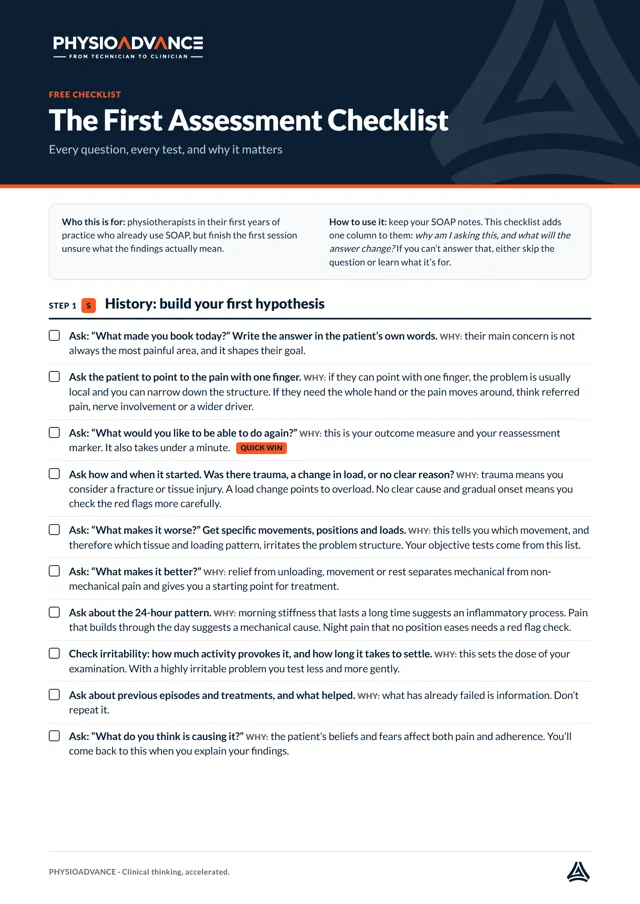
Start here, for free

Practical tools you can use in your next session. No theory for its own sake: every question and test comes with the reason you'd use it.

All free resources →

Coming soon

Two ways to go further

A free checklist shows you the questions. Learning to reason through real patients takes practice and someone to check your thinking. That's what we're building. Leave your email and you'll hear first, before we announce it anywhere else.

We'll only email you about the programme you chose, plus one reminder before it opens. Unsubscribe anytime. Privacy policy.

Clinical Reasoning Mentorship for Physiotherapists

What physios tell us before they join

Fair doubts. Here is how we answer them.

“What matters is practice, not theory.”
We think the practical part is easy once you know what you're looking for. Performing an orthopaedic test isn't hard. Knowing which tests are worth running is. We've used these tests every day for 10 years and kept the ones that proved reliable. We save you 10 years of guessing which test to trust.
“I can learn all this from courses and videos.”
Courses teach techniques. They don't look at your patient and show you where your reasoning went wrong. In mentorship we work through your own cases, 1:1, for 20 weeks.
“I'm not experienced enough yet.”
That's who it's built for: physios in their first years of practice and final-year students, especially if you work without a senior to ask.
“Will it actually pay off?”
We've mentored 40+ physios 1:1. Most of them now run their own successful practice.

See 1:1 Mentorship →

Result-Based Therapy

When there is no protocol, reasoning is all you have

For some patients there is no research and no protocol to follow. Only a real understanding of anatomy, biomechanics and neurology. Franjo has treated four syndromes so rare that most physiotherapists never see a single case.

  • Guillain-Barré Syndrome

    In Spain and Croatia, his patient is considered possibly the first case of a fourth type of GBS.

  • Susac Syndrome

    Around 500 cases reported worldwide, mostly women aged 20 to 40. His patient was a teenager. The case is now published.

  • Ehlers-Danlos Syndrome

    Affects 1 in 20,000 to 40,000 people. At the time, his patient was the only person in Croatia with the condition, making Franjo one of very few physios in the country with hands-on EDS experience.

  • Hajdu-Cheney Syndrome

    Fewer than 1 in 1,000,000 births. Around 50 cases described worldwide since 1948.

Peer-reviewed case study

Integrated physiotherapy approach for Susac syndrome: a comprehensive case study

Bilić D, Hrkač A, Keškić F
Journal of Bodywork and Movement Therapies, 2024; 40: 757–760

A teenage patient who needed help to walk even short distances. After 12 weeks of intensive physiotherapy and a 4-month follow-up, she walked 100 m on her own, with clear gains in muscle strength and faster Timed Up and Go times.

Read on PubMed ↗

Trusted by elite athletes

About us

Two clinicians, still in clinic every day

We built PhysioAdvance for the physio we both once were: qualified, keen, and finishing sessions unsure what the findings actually meant. Everything we teach comes from our own treatment rooms in Croatia and Bosnia and Herzegovina.

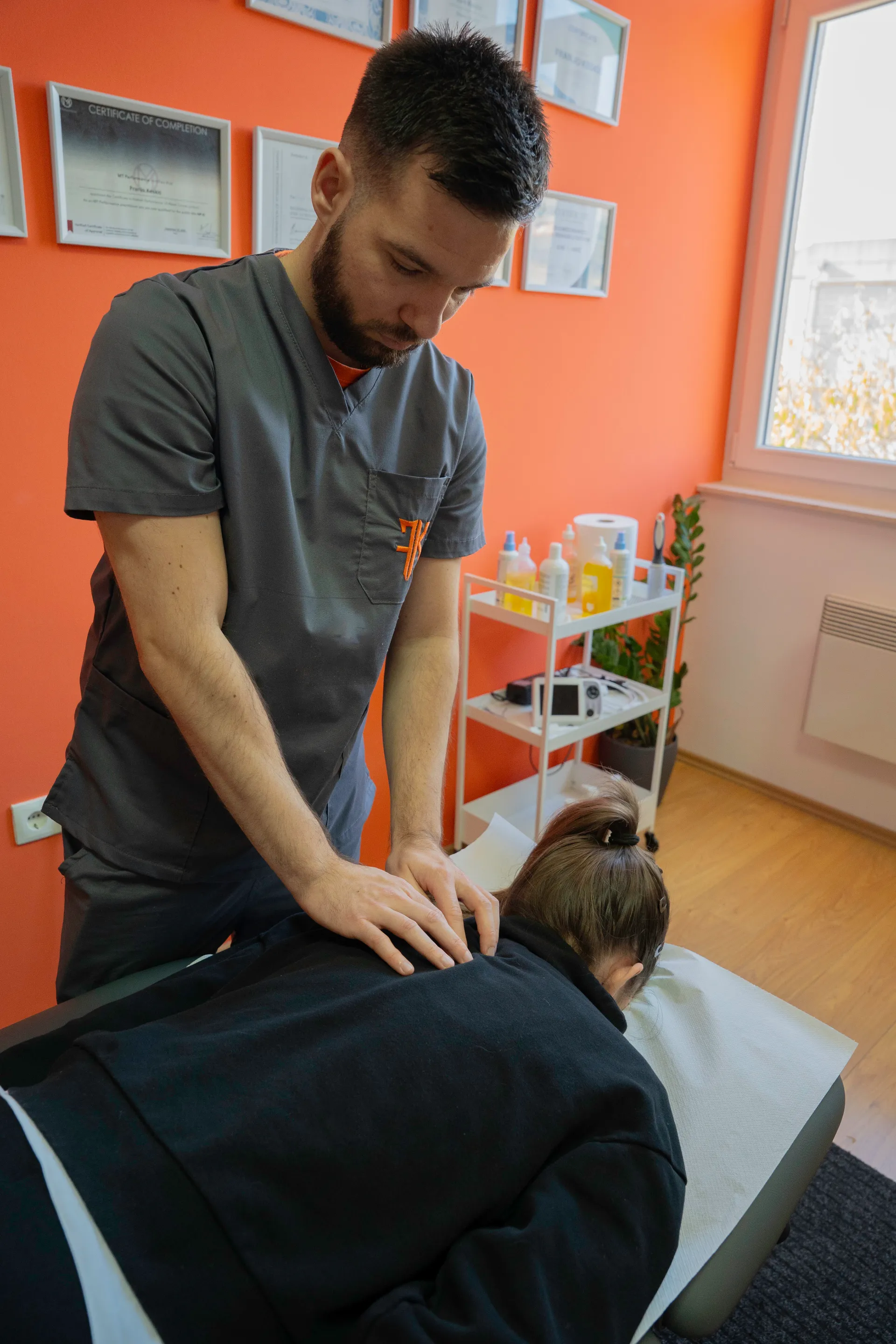
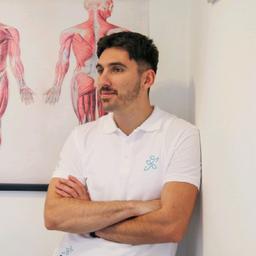
Franjo Keškić treating a patient’s upper back on a treatment table
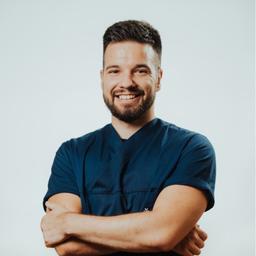
Franjo KeškićMSc Physiotherapy

Kaštel Sućurac, Croatia

Franjo Keškić

Founder, Fizio Centar Keškić, Kaštel Sućurac, Croatia

Franjo came into physiotherapy after his own football injury was misdiagnosed. That experience is why the first assessment and clinical reasoning sit at the centre of everything he teaches.

  • ~10 years in practice
  • 40+ physios mentored 1:1
  • Guest lecturer, Život Academy
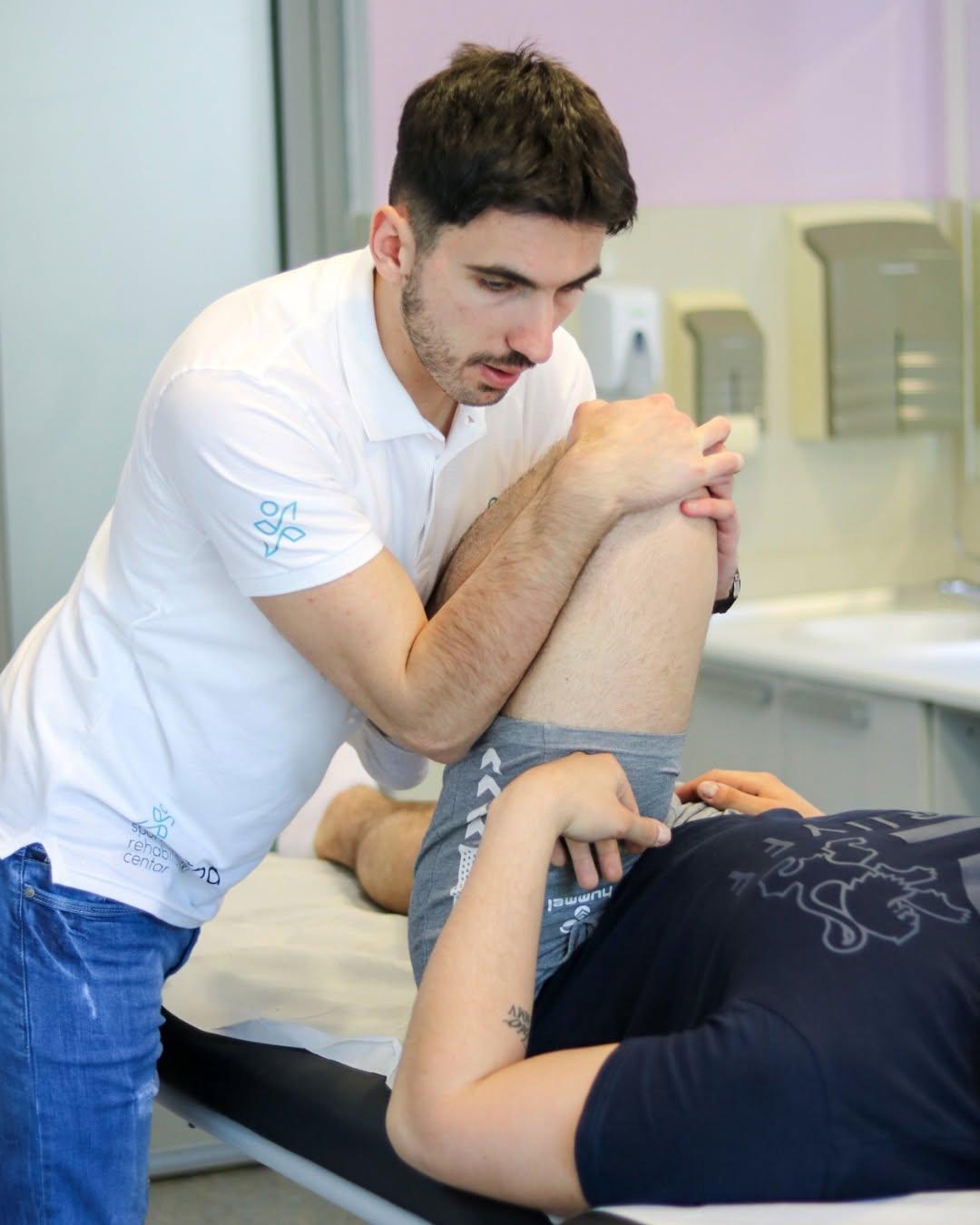
Kenan Gosto testing a patient’s hip in flexion on a treatment table
Kenan GostoMSc Physiotherapy

Mostar, Bosnia and Herzegovina

Kenan Gosto

Co-founder, Noxana physiotherapy and rehabilitation centre, Mostar, Bosnia and Herzegovina

From elite swimmers to chronic pain patients, Kenan’s caseload covers the full range. He teaches colleagues through mentoring and practical workshops.

  • BiH national swimming team
  • European champion Lana Pudar
  • Physiotherapy 101 workshops
“Find the cause of the dysfunction. Don't just treat the place that hurts.”
~10 years
in clinical practice
40+
physios mentored 1:1. Most now run their own successful practice
2 clinics
Croatia and Bosnia and Herzegovina

Success stories

Results you can see

Real patients from our clinics, photographed before and after. Some changed in a single session, others over a few months.

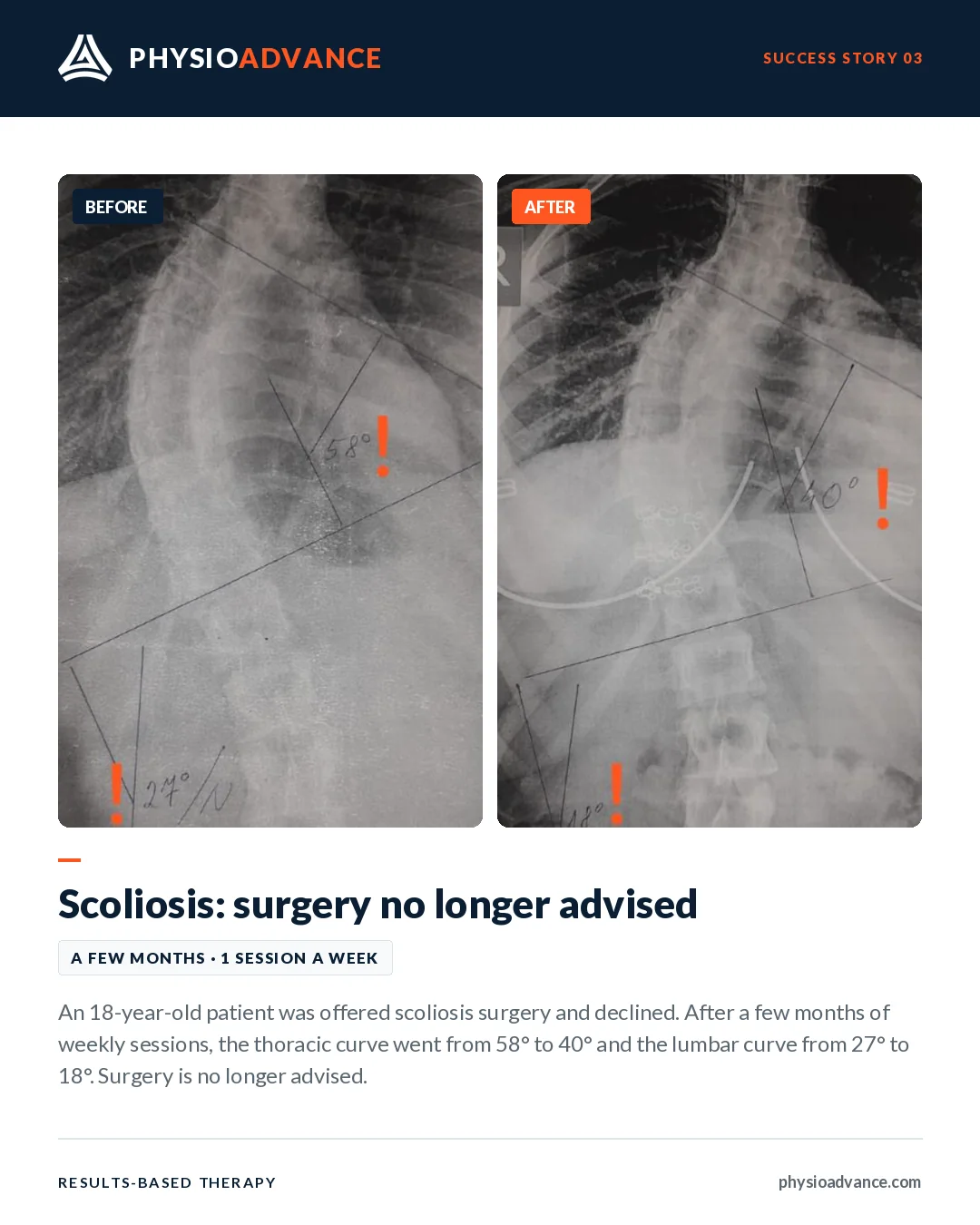
Before and after X-rays. An 18-year-old patient was offered scoliosis surgery and declined. After a few months of weekly sessions, the thoracic curve went from 58° to 40° and the lumbar curve from 27° to 18°. Surgery is no longer advised.
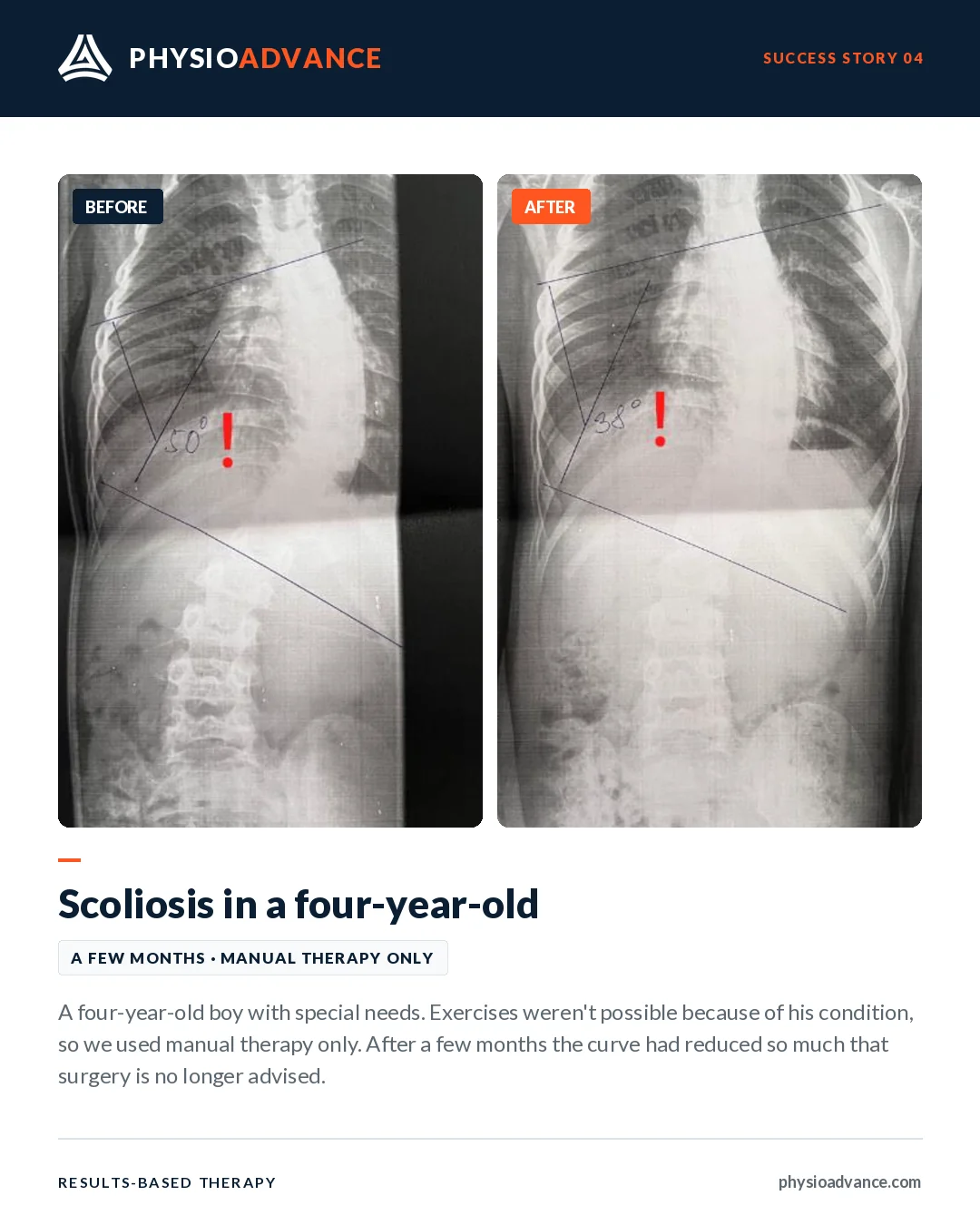
Before and after X-rays. A four-year-old boy with special needs. Exercises weren't possible because of his condition, so only manual therapy was used. After a few months the curve had reduced so much that surgery is no longer advised.
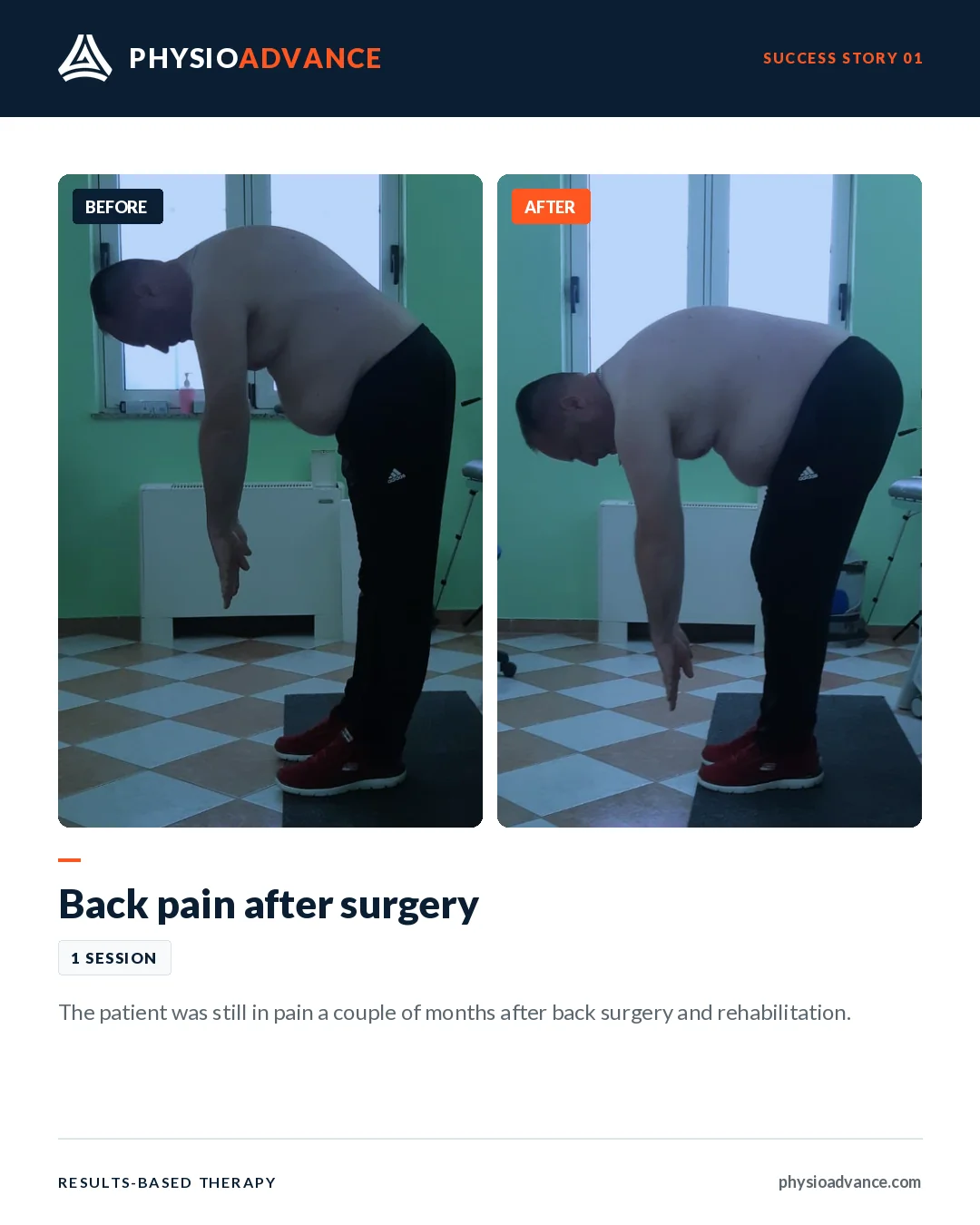
Before and after photos of a forward bend, 1 session apart. The patient was still in pain a couple of months after back surgery and rehabilitation, and reaches noticeably further after the session.
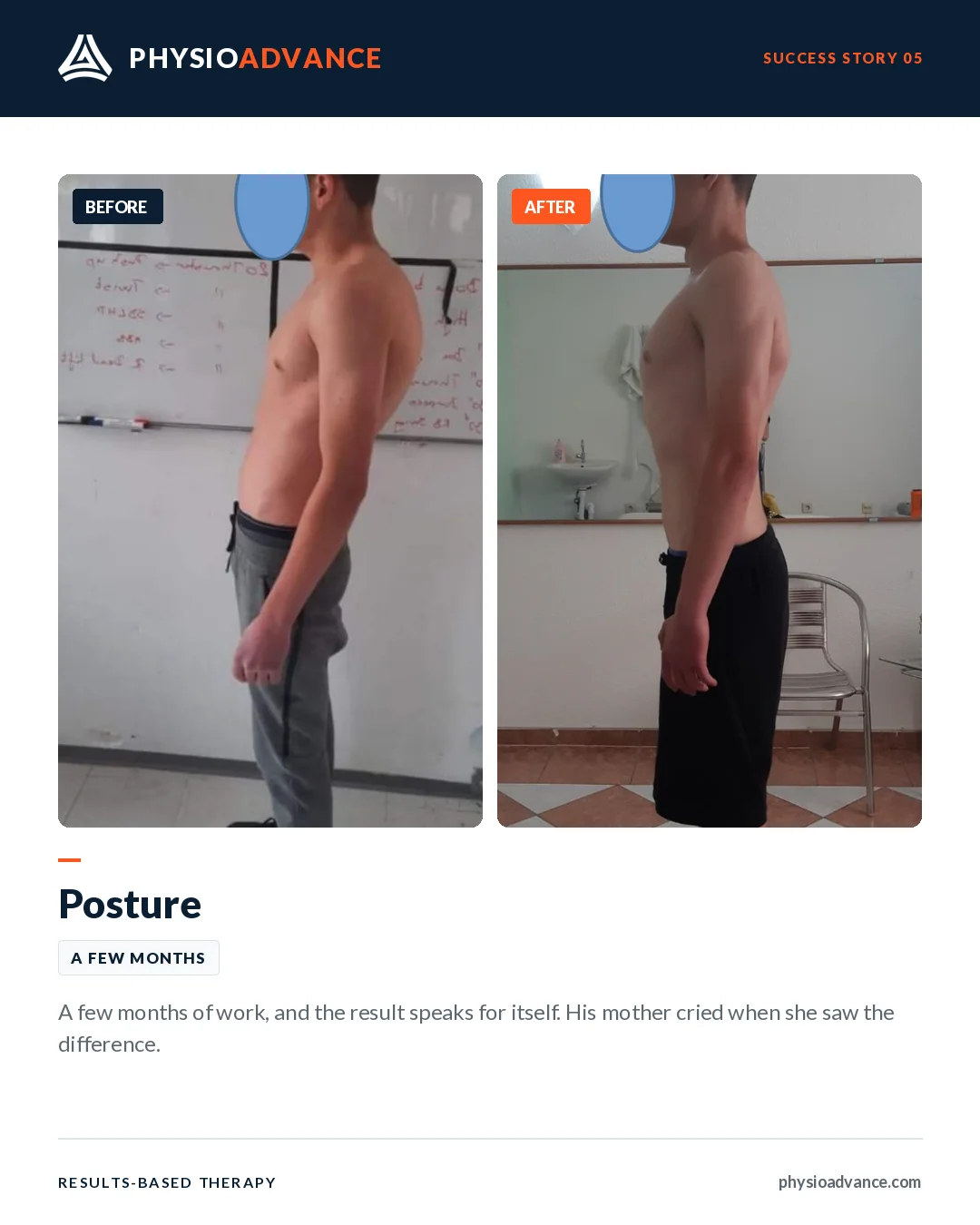
Side-view before and after photos of a teenager's posture after a few months of work. His mother cried when she saw the difference.
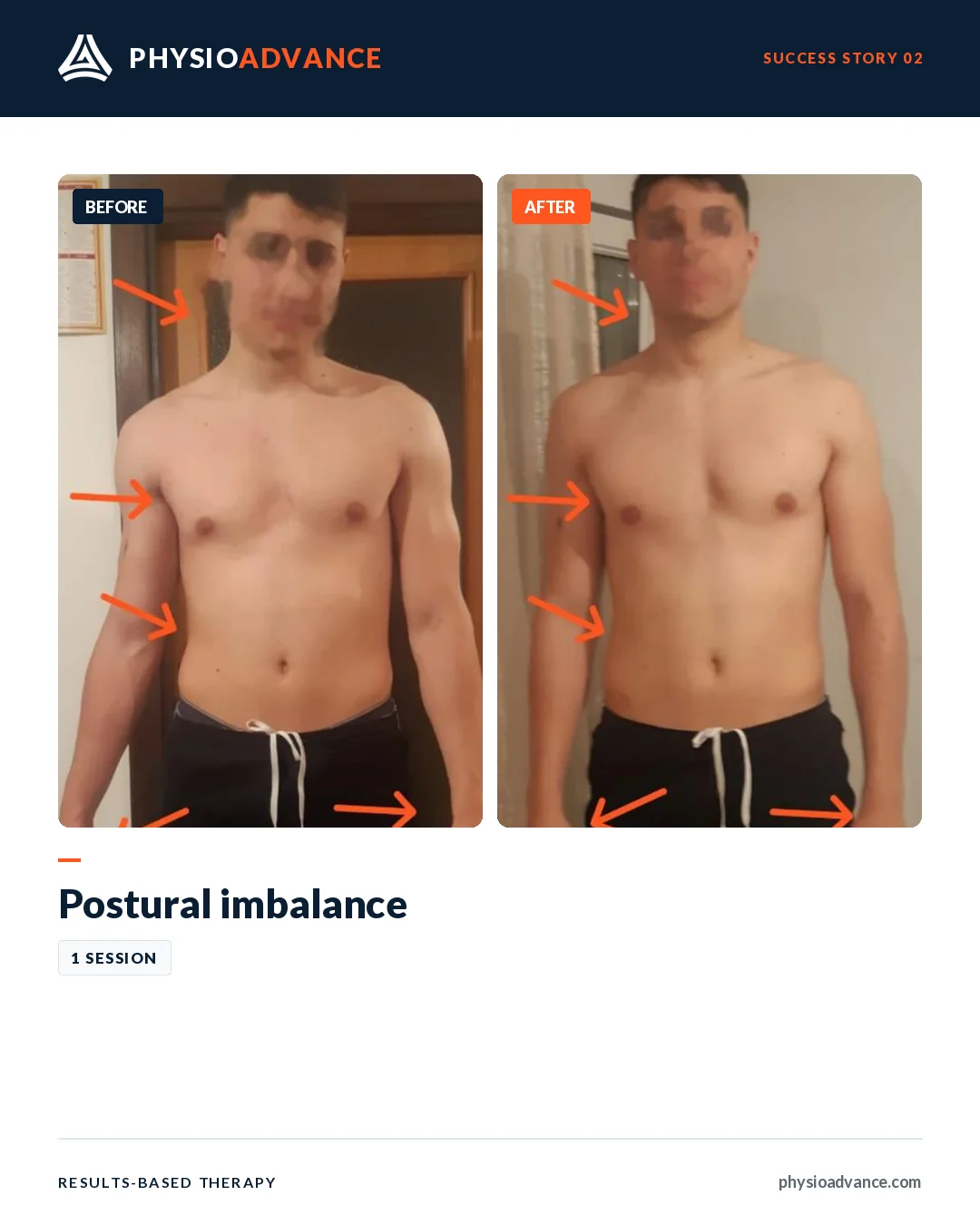
Front-view before and after photos after 1 session, with arrows marking the shoulders, trunk and hips, which sit visibly more level afterwards.
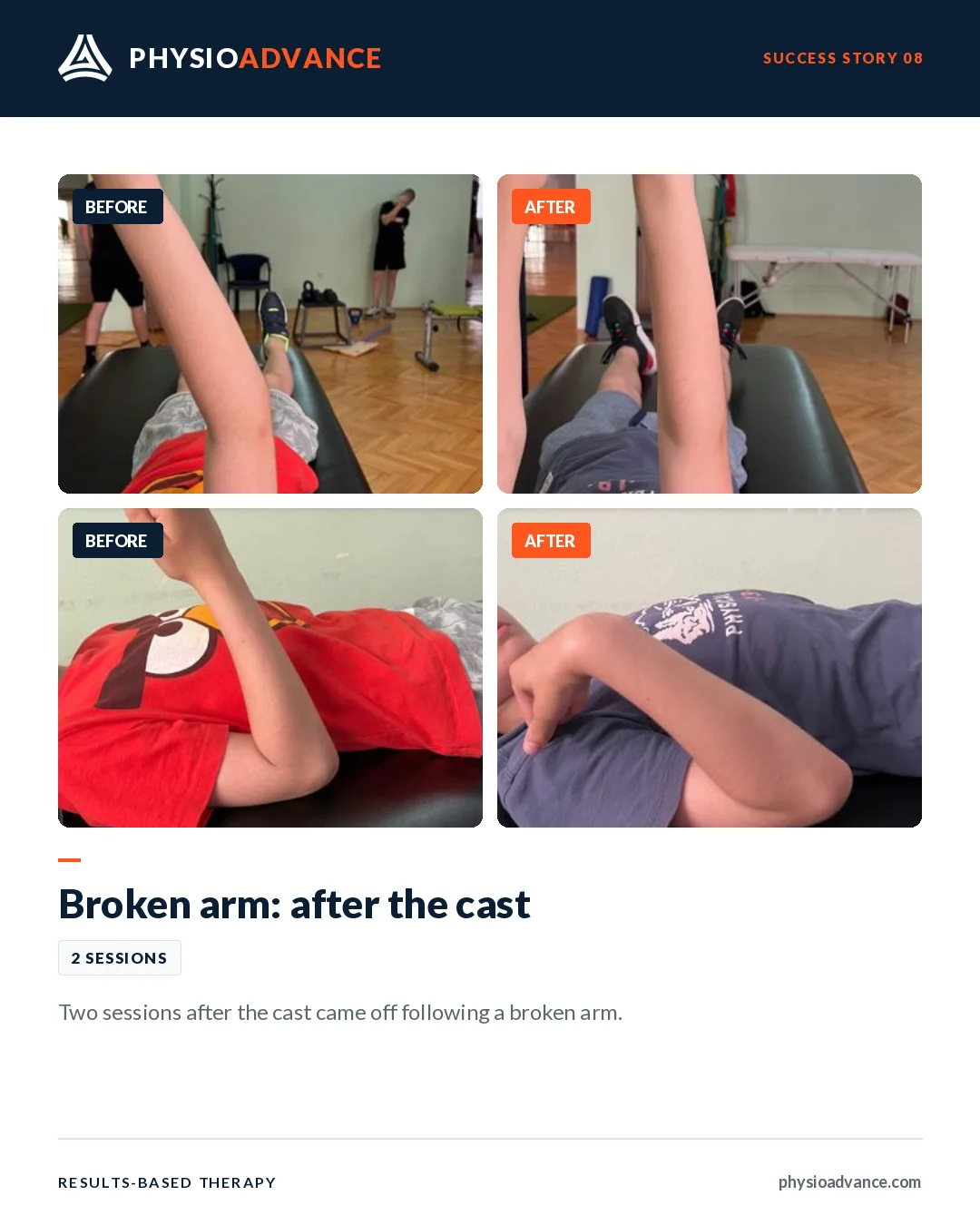
Before and after photos of elbow bending and straightening, 2 sessions after the cast came off following a broken arm.
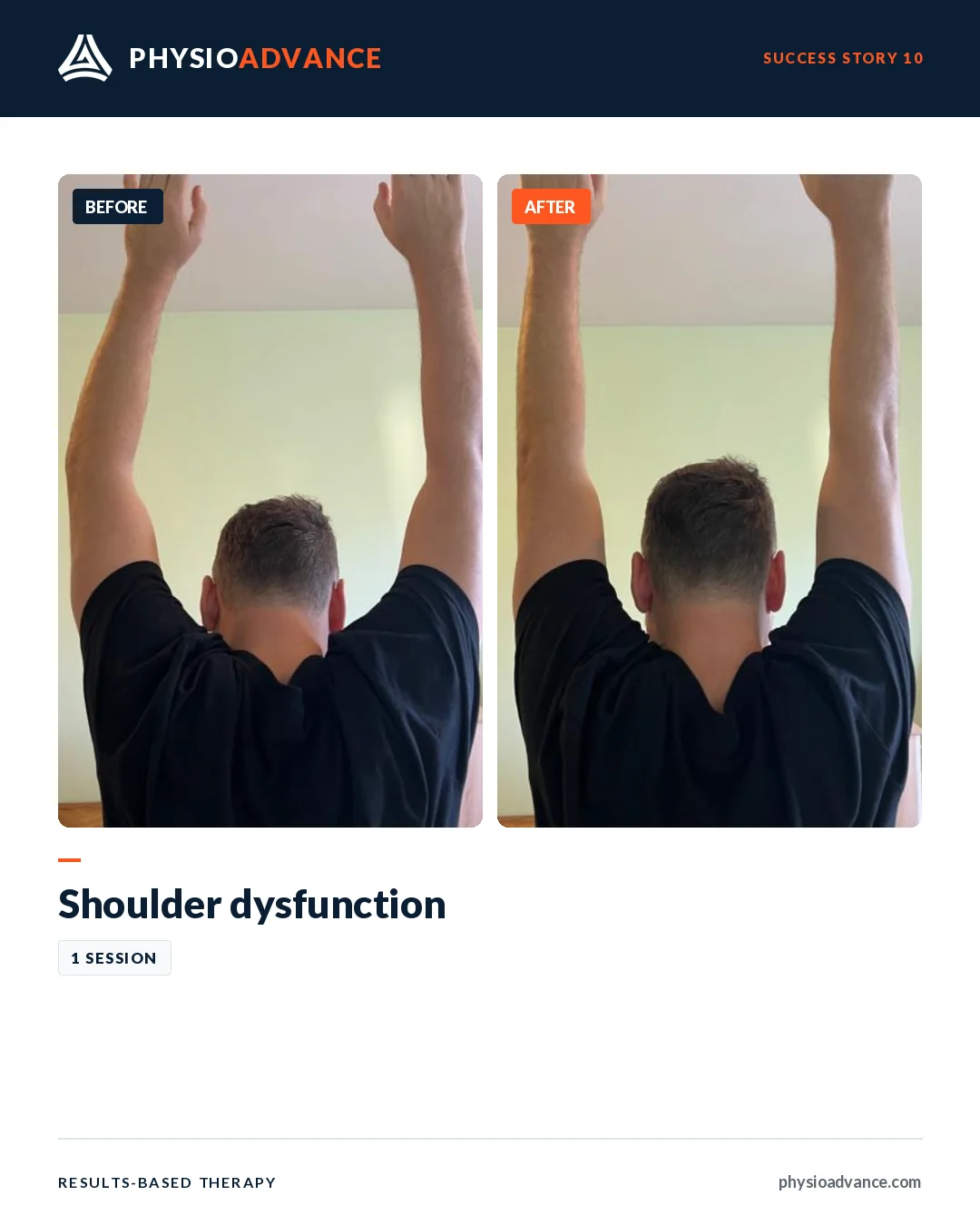
Back-view photos of both arms raised overhead, before and after 1 session. Afterwards both arms reach higher and more evenly.
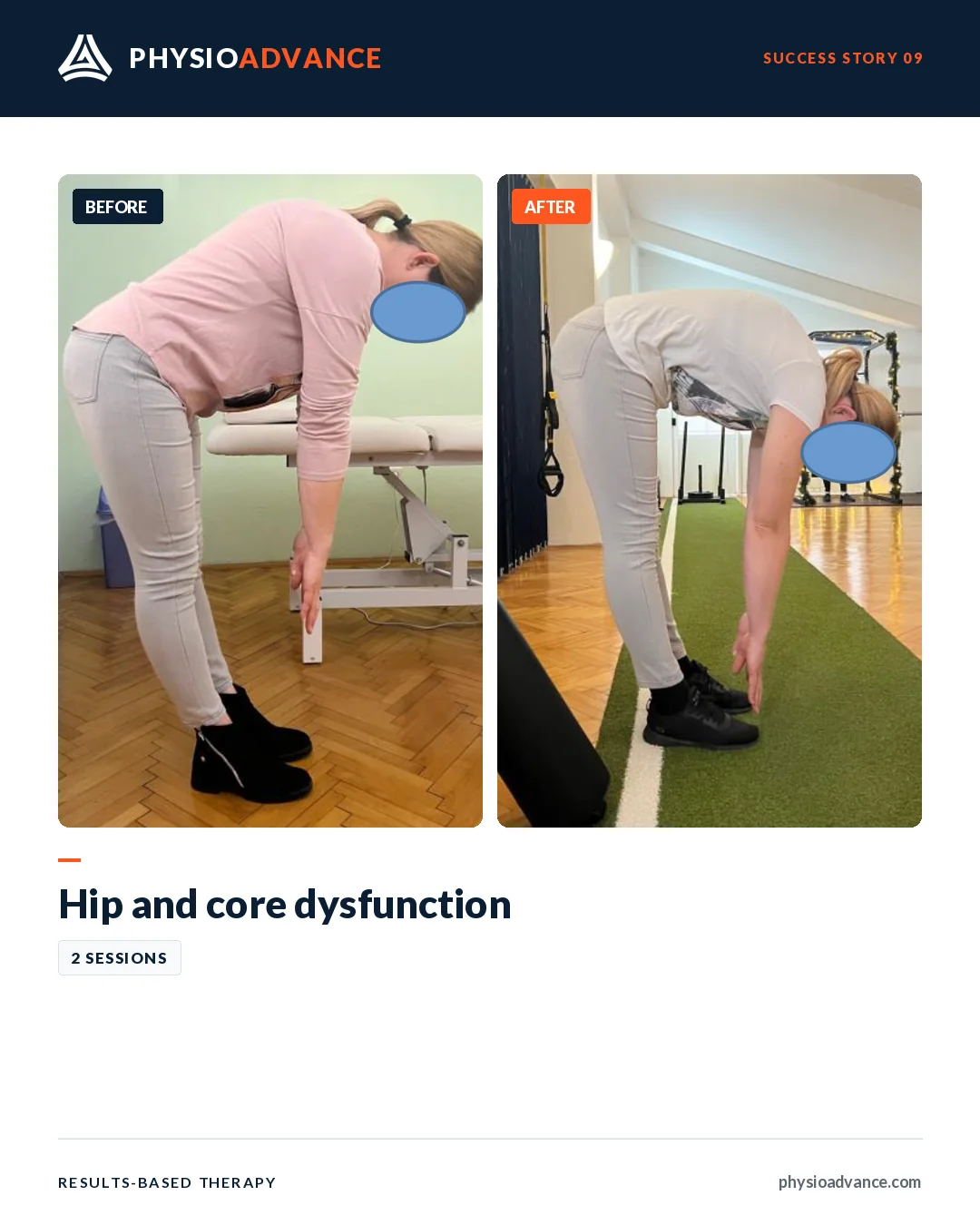
Before and after photos of a forward bend, 2 sessions apart. Afterwards the patient reaches the floor.
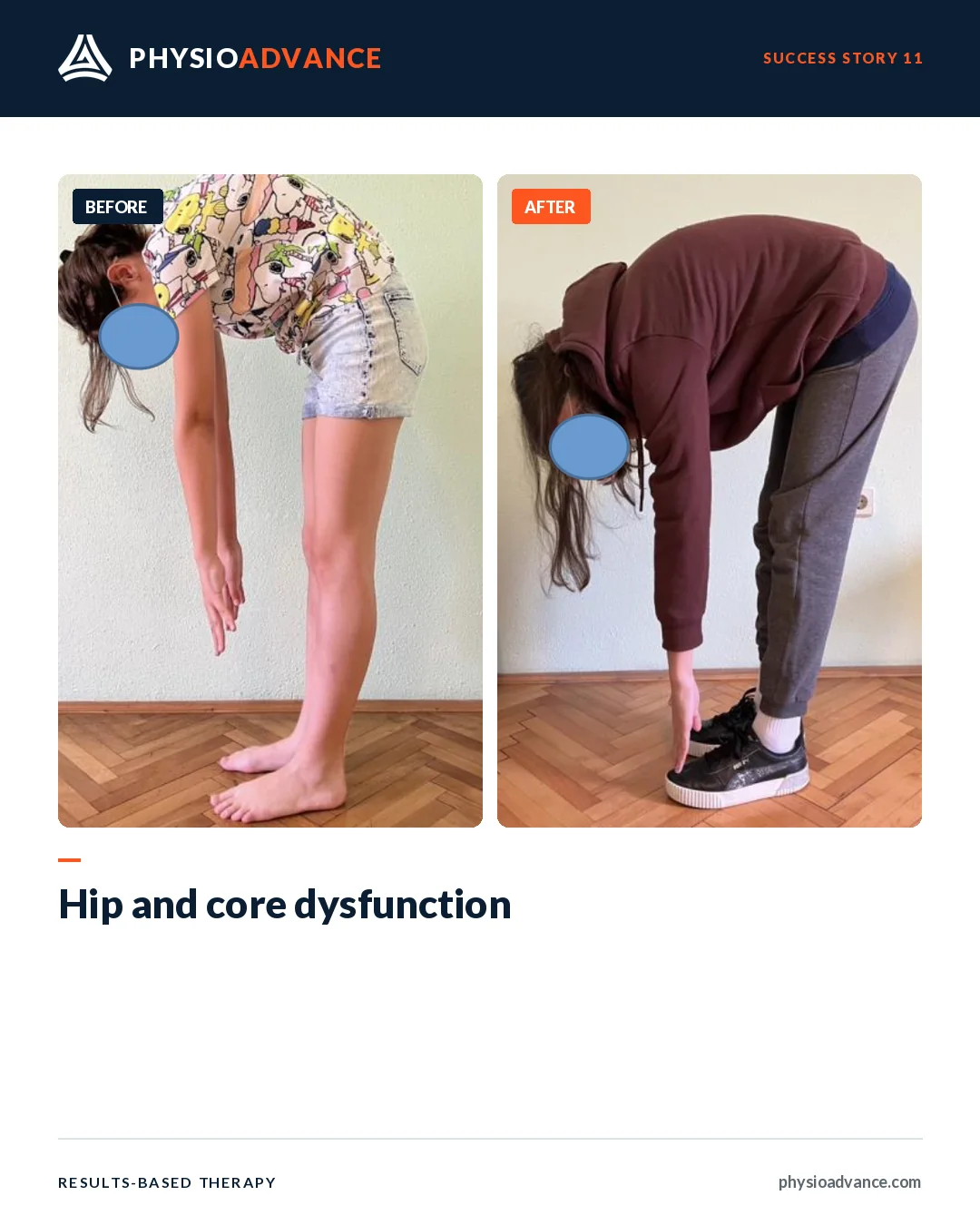
Before and after photos of a forward bend. Before, the fingertips stop at the shins. After, the palms reach the floor.
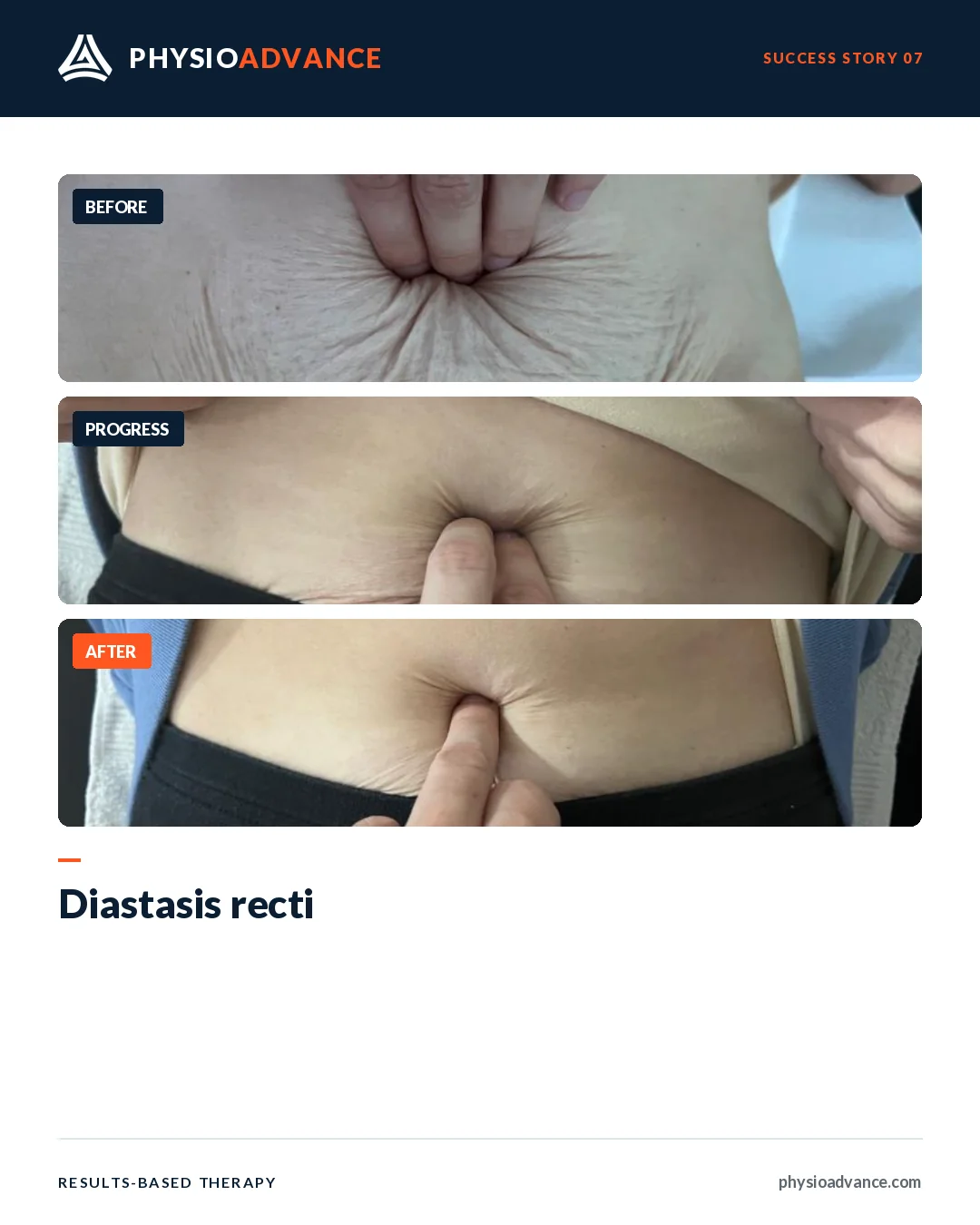
Three photos of the abdominal wall: before, during and after treatment. The gap between the abdominal muscles gets visibly smaller.
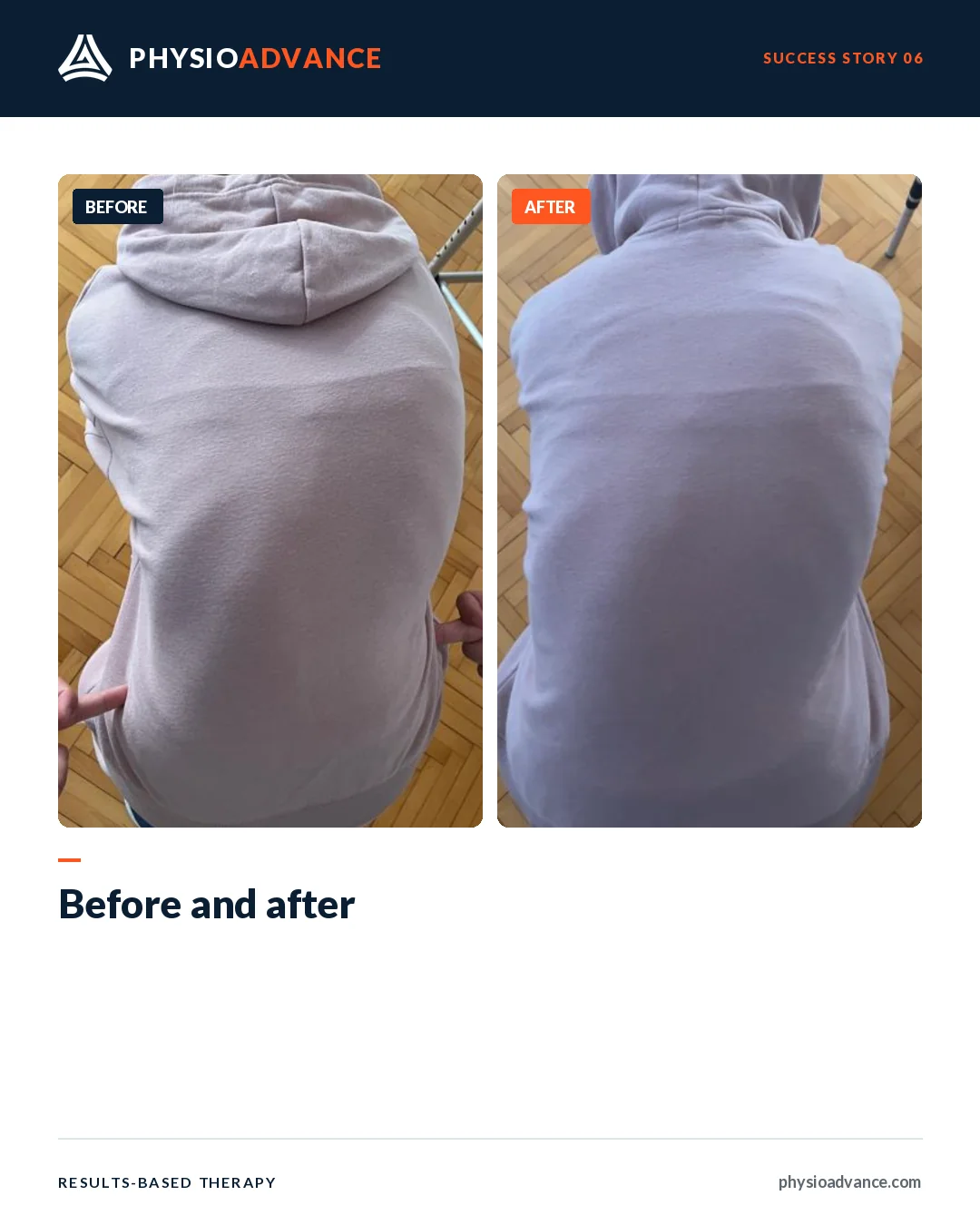
Photos of a patient bending forward, taken from behind, before and after treatment. The back is visibly more even afterwards.

From our mentees

From physios who learnt to reason, not guess

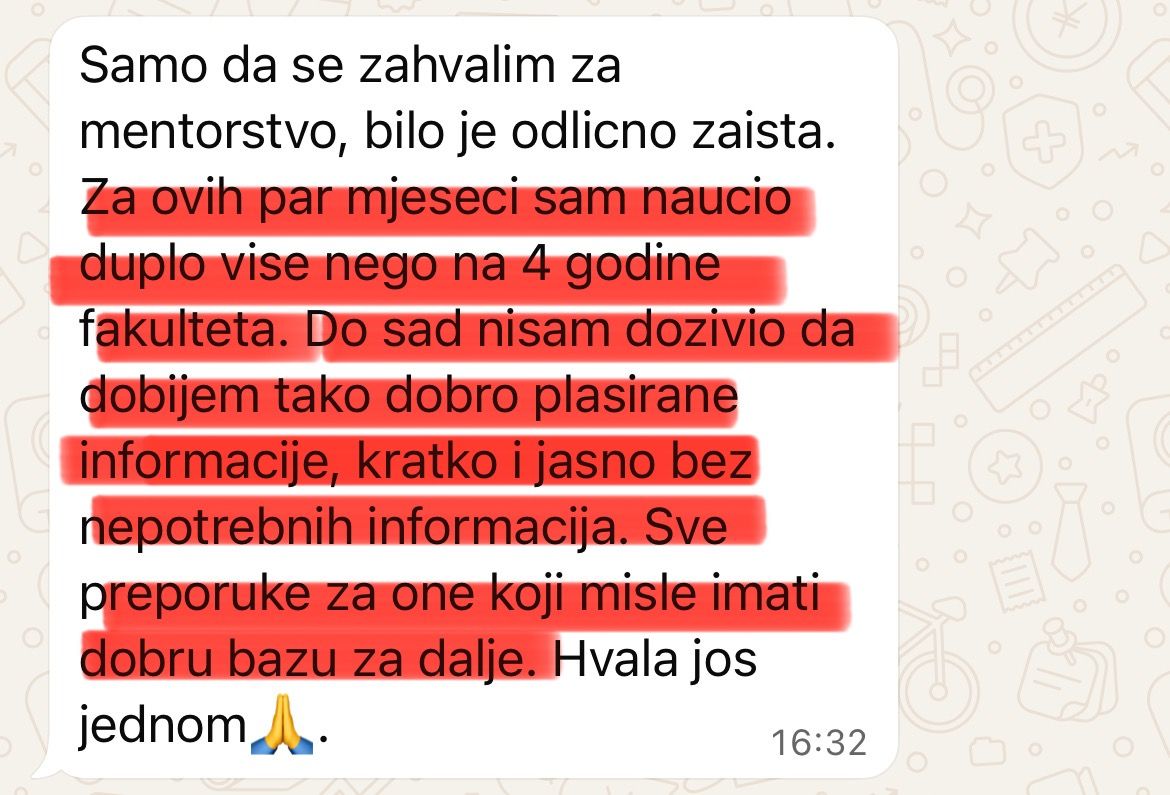
“Twice as much as in 4 years of university. Short and clear, without anything unnecessary.”
Mentorship graduate, message to Franjo
Original WhatsApp message in CroatianOriginal message, Croatian · open full size
Read the full translation

“In these few months I've learnt twice as much as in 4 years of university. I've never had information delivered so well: short and clear, without anything unnecessary.”

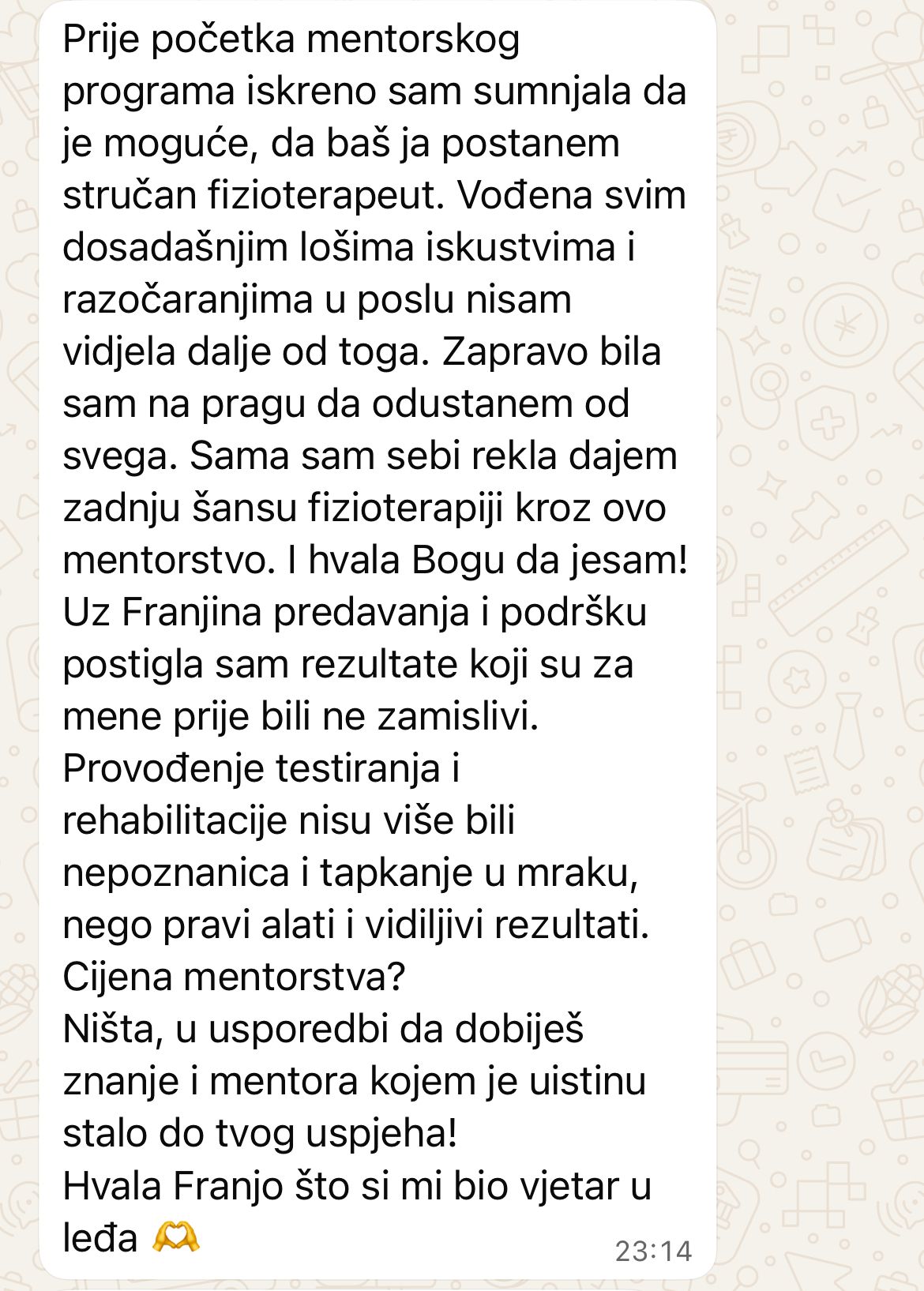
“Assessment and rehab are no longer a mystery or groping in the dark. They’re real tools with visible results.”
Mentorship graduate, message to Franjo
Original WhatsApp message in CroatianOriginal message, Croatian · open full size
Read the full translation

“Before the mentorship started, I honestly doubted that I, of all people, could become a skilled physiotherapist. I was on the verge of giving it all up. With Franjo's lectures and support, I achieved results I couldn't have imagined before. Assessment and rehab are no longer a mystery or groping in the dark. They're real tools with visible results.”

“I had to get to the stage where I trust my tests more than others' opinions.”
Mentorship graduate, chat with Franjo
Original WhatsApp chat in CroatianOriginal message, Croatian · open full size
Read the full translation

“Franjo: “That's why you trust tests, not arbitrary findings.” Mentee: “Yes, you're right, I can see that now too. But I had to get to the stage where I trust myself more than others on these things.””

“A person tells you their symptoms, and you're instantly down to 2 or 3 diagnoses.”
Mentorship graduate, message to Franjo
Original WhatsApp message in CroatianOriginal message, Croatian · open full size
Read the full translation

“Everything is so much simpler now. A person comes in and tells you their symptoms, and you're instantly down to 2 or 3 diagnoses and can rule out everything else, from orthopaedics to compressions.”

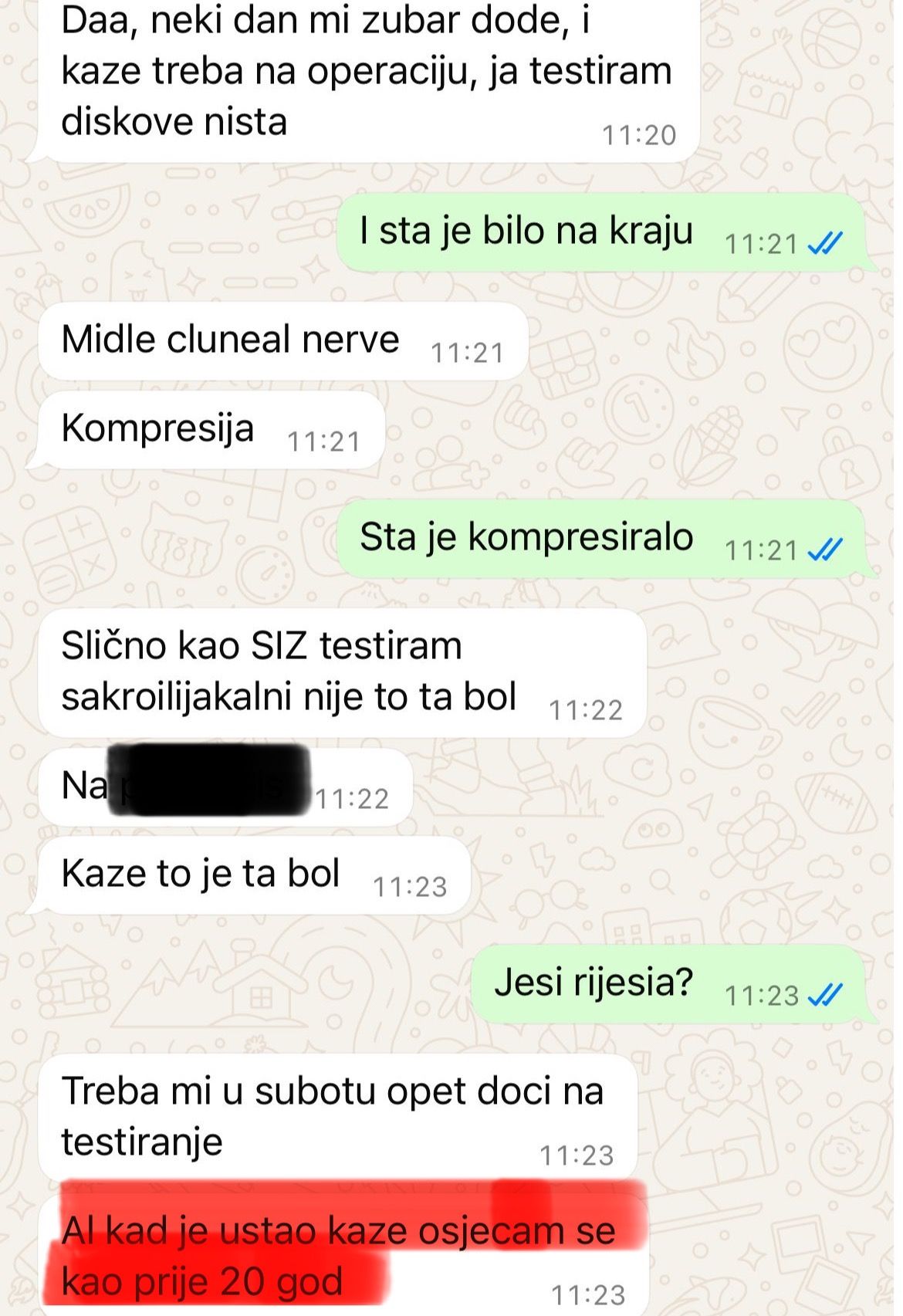
“Told he needed surgery. I tested the discs: nothing. It was the middle cluneal nerve.”
Mentorship graduate, chat with Franjo
Original WhatsApp chat in CroatianOriginal message, Croatian · open full size
Read the full translation

“Mentee: “A dentist came in, said he'd been told he needs surgery. I test the discs: nothing.” Franjo: “And what was it in the end?” Mentee: “Middle cluneal nerve. Compression. I test the sacroiliac joint, that's not the pain. When he got up, he said: ‘I feel like I did 20 years ago.’””

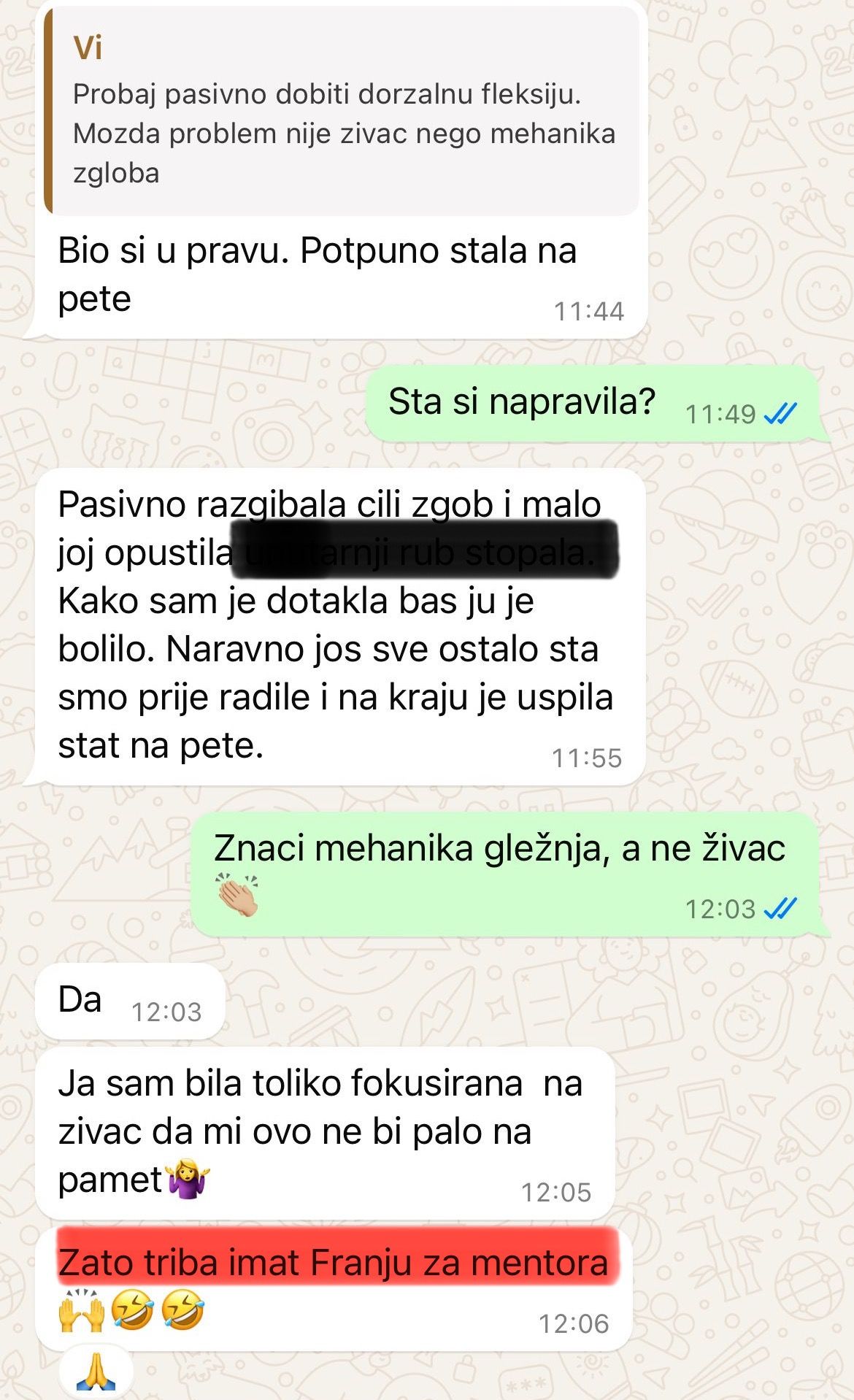
“I was so focused on the nerve that the joint mechanics would never have crossed my mind.”
Mentorship graduate, chat with Franjo
Original WhatsApp chat in CroatianOriginal message, Croatian · open full size
Read the full translation

“Franjo: “Try getting dorsiflexion passively. Maybe the problem isn't the nerve but the joint mechanics.” Mentee: “You were right. She stood fully on her heels. I was so focused on the nerve that this would never have crossed my mind.””

“5–6 months of hip and buttock pain. After 10–15 minutes she walked with 80–90% less pain.”
Mentorship graduate, message to Franjo
Original WhatsApp message in CroatianOriginal message, Croatian · open full size
Read the full translation

“A woman came in today with pain at the front of the hip on longer strides and buttock pain when sitting and standing up, for 5–6 months already. I immediately remembered what you'd talked about, and we did a few exercises for those muscles and the ones compensating. After 10–15 minutes she got up and walked with 80–90% less pain.”

“I used to struggle with those diagnoses. Now meniscus cases: 4 out of 4 so far. Before, I'd have just given strengthening for absolutely everything.”
Mentorship graduate, chat with Franjo

Questions

Who is PhysioAdvance for?

Physiotherapists in their first years of practice and final-year students, especially if you work without a senior to ask. Experienced physios who want a clearer reasoning process are welcome too.

What's the difference between the Community and Mentorship?

The Community is for learning steadily as part of a group: monthly live webinars, a core course and cases. Mentorship is 20 weeks of 1:1 work on your own patients, with a maximum of 10 people at a time.

How much will it cost?

We'll share prices with the waiting list first, before the public announcement.

I trained outside the UK. Is this for me?

Yes. We teach reasoning, not a country's protocols. You'll always follow your local guidelines and referral pathways.

Does joining the waiting list commit me to anything?

No. It only means you'll hear first when places open.

Follow along

Not sure where to start?

Start with the free checklist. Use it in your next first session and see what changes.