






Free e-book for physiotherapists

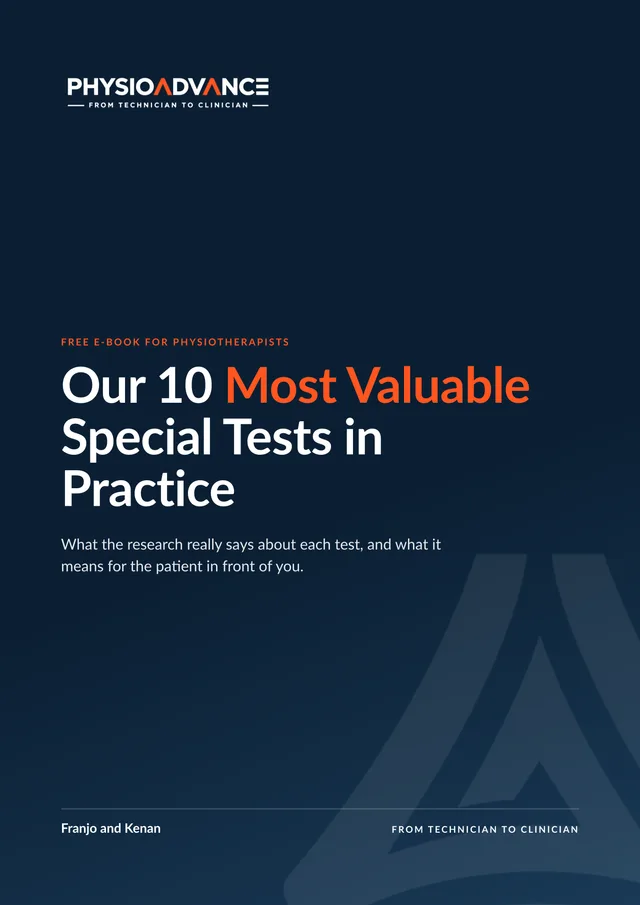
Our 10 Most Valuable Special Tests in Practice

Ten tests we rely on every day, even though the research says most of them are weak. For each one: what the studies show, where we think they get it wrong, and exactly how we use the test in our clinics. Every figure cited.

  • Free PDF e-book, 18 pages
  • 16 studies, every figure cited
  • Used daily by our team and mentees
From the e-book · All ten at a glanceOur 10 Most Valuable Special Tests in Practice
Only three lift a 30% probability above 50%

Left dot: after a negative result. Right dot: after a positive result.

Joint line tenderness68%
SIJ cluster65%
Spurling's (Wainner)60%
Empty can50%
Straight leg raise35%
FADDIR31%

Get the free e-book

Free PDF, 18 pages. It lands in your inbox within a minute. We never share your email. Privacy policy.

“The research says this test is weak. We use it every day.”

Read the numbers blindly and most special tests look close to useless. Yet these ten have proven reliable for us, for everyone who works in our clinics and for the physios we have mentored. This e-book shows both sides: what the research says, why we think it often asks the wrong question, and how we use each test with the patient in front of us.

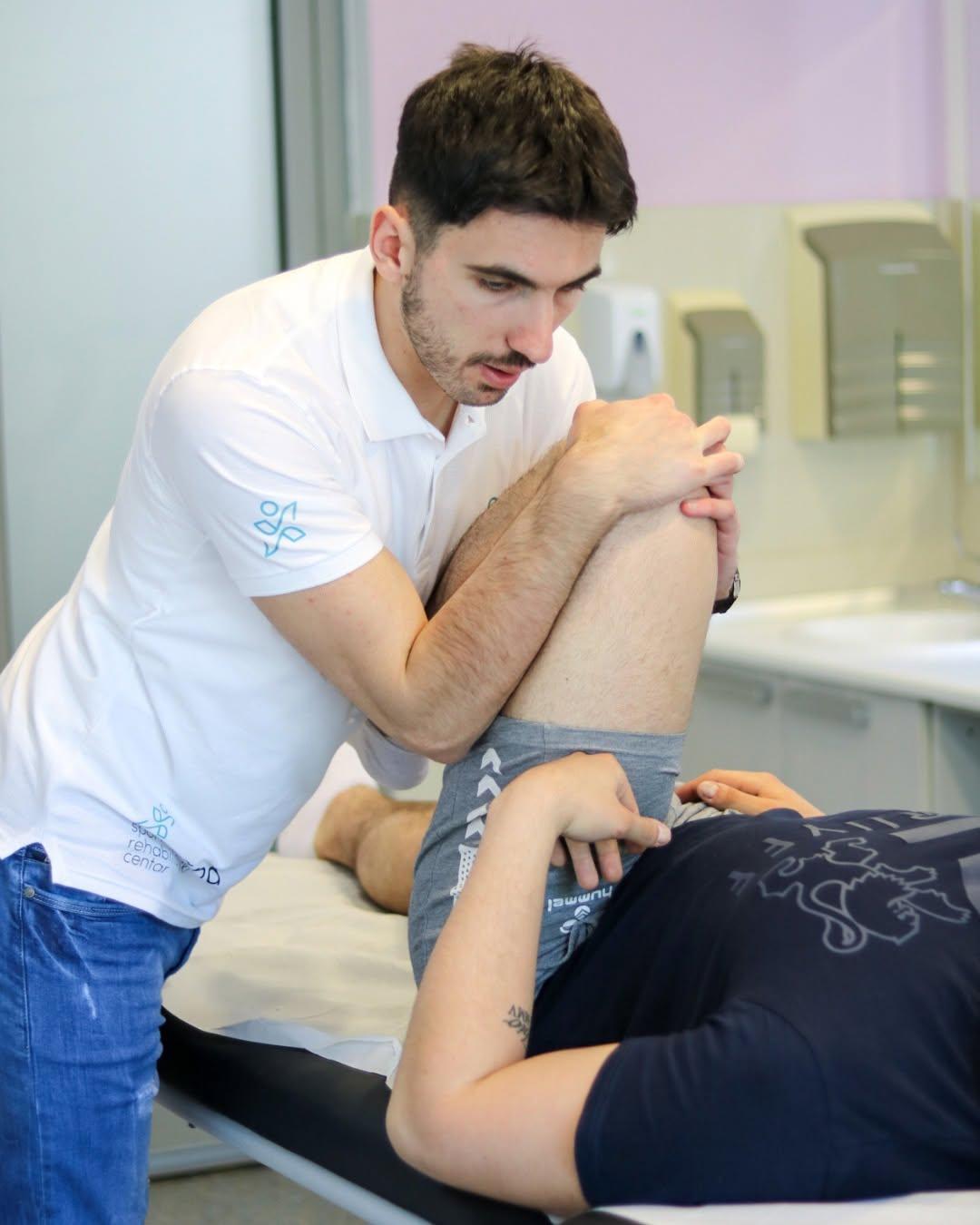
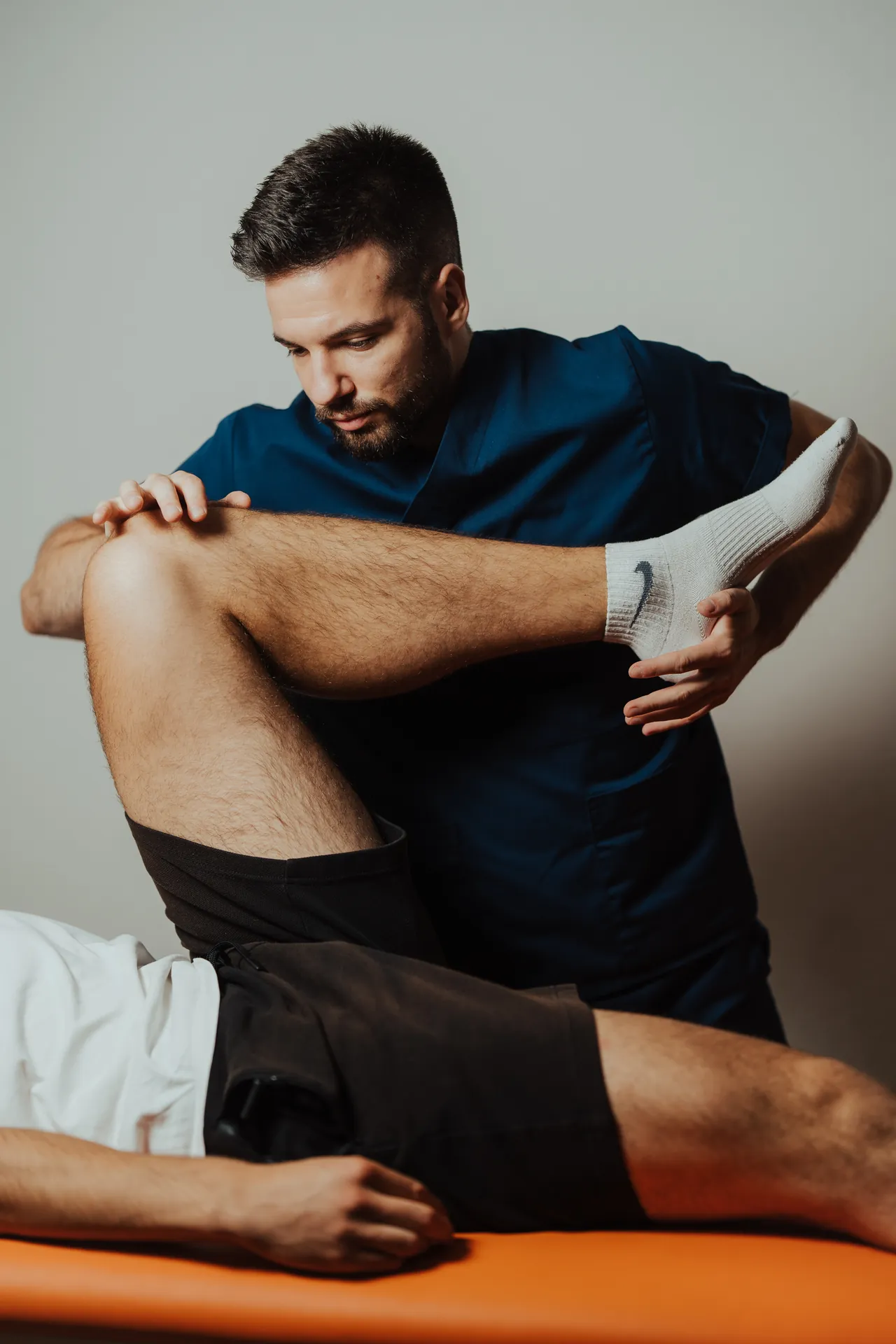
A physiotherapist taking the flexed hip of a patient lying on a treatment table into a test position
A hip assessment in clinic

What's inside the e-book

10 special tests, from the Ottawa ankle rules to joint line tenderness: how to perform each one, what the research really says, and what a result means for your patient.

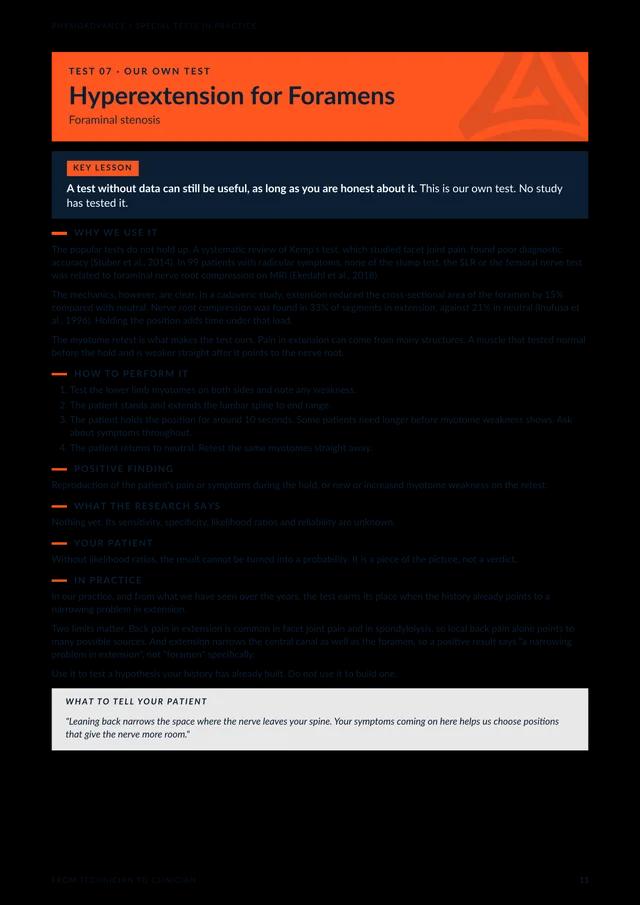
Cover: Our 10 Most Valuable Special Tests in PracticeTest 07: Hyperextension for Foramens, our own testAll ten at a glance: probability chart and summary table

Send me the e-book

  1. Every test · How to perform it

    Step-by-step technique and an exact positive finding for all 10 tests, so you perform each one the same way every time and know exactly what counts as positive.

    From the e-bookSpurling's: head into extension and side flexion towards the symptomatic side. Positive: the patient's familiar sharp pain or pins and needles below the elbow.

  2. Every test · What the research says

    Sensitivity, specificity and likelihood ratios from 16 cited studies, so you know which result to trust: the positive, the negative, or neither.

    From the e-bookOttawa ankle rules: a pooled negative likelihood ratio of 0.08 across 27 studies and 15,581 patients. A negative result cuts the odds of a fracture to less than a tenth.

  3. Every test · Your patient

    The same imaginary 30% patient, worked through every test, so you see in plain percentages what a result changes, and can compare the tests directly.

    From the e-bookPositive FADDIR: 30% → 31%. Negative FADDIR: 30% → 8%. A positive result moves the probability by less than one point.

  4. Every test · Our view

    Our view on each test: where the research falls short and what we have seen in clinic, so you can use 'weak' tests like FADDIR or Cozen's for what they actually show: compression, irritability and progress.

    From the e-bookWhether a patient has a disc herniation is not the question that matters to us. What matters is whether it is irritating a nerve and causing this patient's symptoms.

  5. Test 07 · Hyperextension for Foramens

    Our own test and the myotome retest, with an honest note that no study has tested them yet, and exactly when they earn their place.

    From the e-bookTest the myotomes, hold lumbar extension for around 10 seconds, then retest straight away. New weakness after the hold points to the nerve root.

  6. Every test · What to tell your patient

    One sentence to tell your patient after each test, so you explain your findings clearly instead of guessing.

    From the e-book“This tells us how sensitive the nerve is right now, not how damaged your back is.”

  7. Pages 15–16 · All ten at a glance

    All ten on one page, plus five lessons from ten tests, to keep next to your notes: which test rules out, which shows nerve irritation, which tracks progress.

How every test is built

Four questions, ten tests

  1. The test we rely on

    How to perform it, step by step, and exactly what counts as a positive finding.

  2. What the research says

    Sensitivity, specificity and likelihood ratios from the original studies, and what they do to a 30% patient. Often: not much.

  3. Why we think the research is wrong

    Most studies ask whether the test finds a lesion on imaging. We ask a different question: does it bring on this patient's familiar pain?

  4. How we use it

    What we use the test for, and why it has proven reliable for us, our team and our mentorship graduates.

Quick answers

Which tests are inside?

Ottawa ankle rules, Spurling's, empty can (Jobe), Cozen's, the medial epicondylalgia test, straight leg raise, Hyperextension for Foramens (our own), FADDIR, the SIJ cluster and joint line tenderness.

Do I need to know statistics?

No. Every test turns the numbers into a percentage for the same imaginary patient and one plain sentence.

Where do the numbers come from?

16 published studies and reviews, listed at the end with DOIs. Where we share our own clinical experience, we say so.

If the research says a test is weak, why use it?

Because the research usually tests it against a lesion on imaging. A herniation or a torn meniscus can be there without causing pain. We use the test to answer whether this structure is causing this patient's symptoms, and for that it has proven reliable in our clinics.

Who is it for?

Physiotherapists and other qualified clinicians, and final-year students who already know the basic tests.

Who it’s for

For you if

  • You run five tests on a shoulder and still aren't sure what's going on.
  • A test comes back positive and you're not sure whether to believe it.
  • You learnt the tests at university, but nobody showed you what the numbers mean.

Not for you if

  • You want an atlas of every special test. This covers 10, each chosen because it teaches one lesson about clinical reasoning.
  • You want one test that gives you the diagnosis. None of these do, and we show you why.

What changes when you test

Without itWith the e-book
A positive test feels like a diagnosis.You know how far it moves the probability: FADDIR by 1 point, joint line tenderness by 38.
You run every test “just in case”.You pick the tests whose negative result you can trust.
A test with no research behind it feels useless.You use it for what it shows: compression, irritability, progress.
You explain findings vaguely, or not at all.You have one clear sentence for the patient after every test.

From physios who learnt to trust their tests

Built from 10 years in clinic and mentoring 40+ physiotherapists. 17 of them share their experience on video.

“I had to get to the stage where I trust my tests more than others' opinions.”
Mentorship graduate, chat with Franjo
Original WhatsApp chat in CroatianOriginal message, Croatian · open full size
Read the full translation

“Franjo: “That's why you trust tests, not arbitrary findings.” Mentee: “Yes, you're right, I can see that now too. But I had to get to the stage where I trust myself more than others on these things.””

“I used to struggle with those diagnoses. Now meniscus cases: 4 out of 4 so far. Before, I'd have just given strengthening for absolutely everything.”
Mentorship graduate, chat with Franjo
Original WhatsApp chat in CroatianOriginal message, Croatian · open full size
“A person tells you their symptoms, and you're instantly down to 2 or 3 diagnoses.”
Mentorship graduate, message to Franjo
Original WhatsApp message in CroatianOriginal message, Croatian · open full size
Read the full translation

“Everything is so much simpler now. A person comes in and tells you their symptoms, and you're instantly down to 2 or 3 diagnoses and can rule out everything else, from orthopaedics to compressions.”

“I was so focused on the nerve that the joint mechanics would never have crossed my mind.”
Mentorship graduate, chat with Franjo
Original WhatsApp chat in CroatianOriginal message, Croatian · open full size
Read the full translation

“Franjo: “Try getting dorsiflexion passively. Maybe the problem isn't the nerve but the joint mechanics.” Mentee: “You were right. She stood fully on her heels. I was so focused on the nerve that this would never have crossed my mind.””

“Told he needed surgery. I tested the discs: nothing. It was the middle cluneal nerve.”
Mentorship graduate, chat with Franjo
Original WhatsApp chat in CroatianOriginal message, Croatian · open full size
Read the full translation

“Mentee: “A dentist came in, said he'd been told he needs surgery. I test the discs: nothing.” Franjo: “And what was it in the end?” Mentee: “Middle cluneal nerve. Compression. I test the sacroiliac joint, that's not the pain. When he got up, he said: ‘I feel like I did 20 years ago.’””

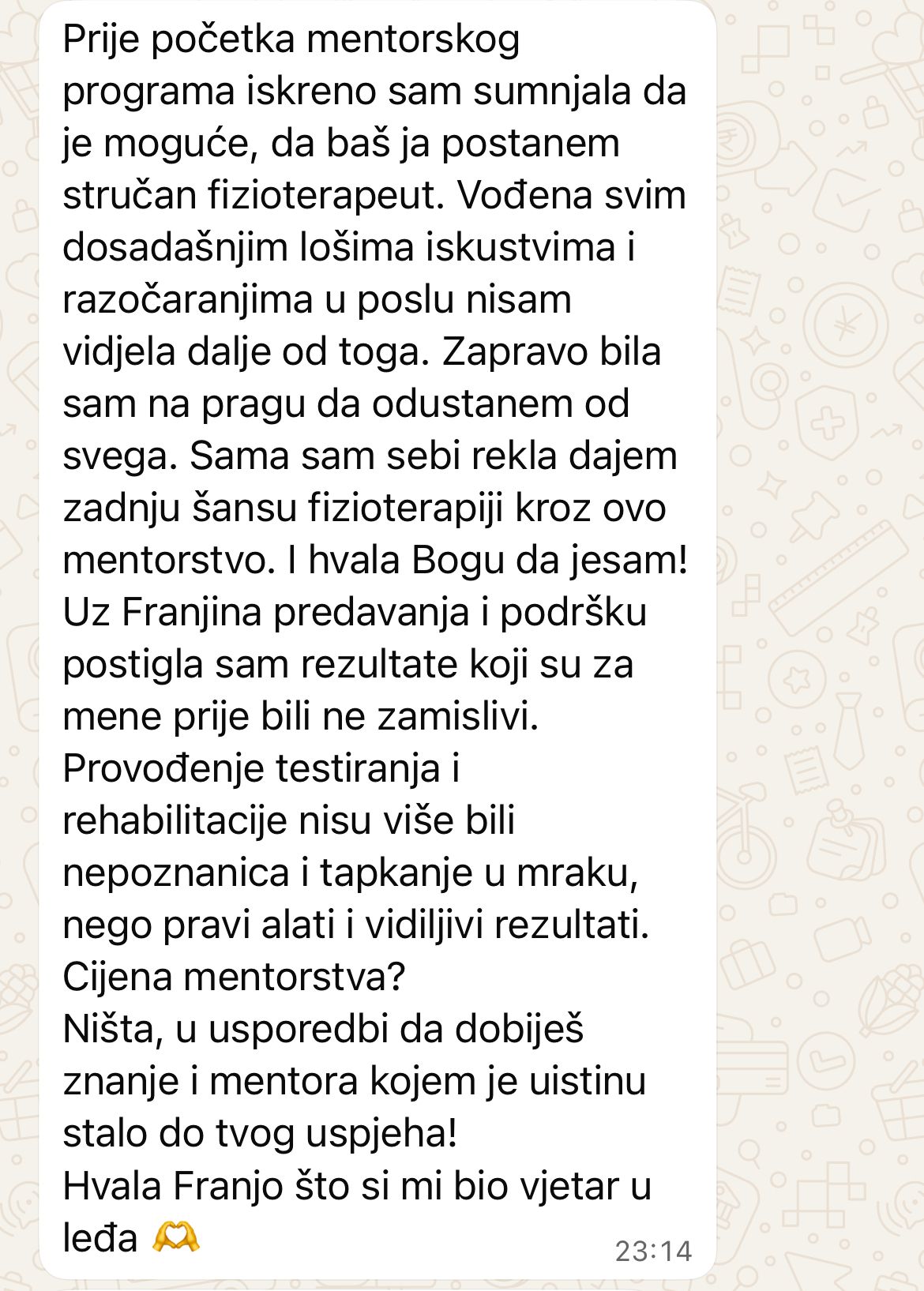
“Assessment and rehab are no longer a mystery or groping in the dark. They’re real tools with visible results.”
Mentorship graduate, message to Franjo
Original WhatsApp message in CroatianOriginal message, Croatian · open full size
Read the full translation

“Before the mentorship started, I honestly doubted that I, of all people, could become a skilled physiotherapist. I was on the verge of giving it all up. With Franjo's lectures and support, I achieved results I couldn't have imagined before. Assessment and rehab are no longer a mystery or groping in the dark. They're real tools with visible results.”

Google reviews

What trainees say about the Noxana internship

Kenan co-founded the Noxana rehabilitation centre in Mostar, which runs an internship for physiotherapy students and young physios. These are the interns’ public Google reviews.

★★★★★
“The internship at Noxana was a great experience, especially for those just starting out. Lots of useful knowledge, practical experience, and a great atmosphere. Highly recommended!”
MajaGoogle review · Noxana internship
★★★★★
“Kudos to the entire Noxana team and their internship program. A lot of interesting things were seen and learned in these 4 weeks, kudos to the mentors for their patience and way of transferring knowledge. Definitely recommend to all students to enroll in the program.”
Karla GalicGoogle review · Noxana internship
★★★★★
“I had the opportunity to participate in training at the rehabilitation center Noxana. The staff is professional and friendly. Access to patients and therapies are very professional. I gained a lot of necessary knowledge for the future. A very nice experience”
Anel KekicGoogle review · Noxana internship

Who’s behind this

Two physiotherapists who still treat patients every day, in Croatia and Bosnia and Herzegovina.

Franjo Keškić mobilising the flexed hip and knee of a patient lying on a treatment table
Franjo KeškićMSc Physiotherapy

Kaštel Sućurac, Croatia

Franjo Keškić

Founder, Fizio Centar Keškić, Kaštel Sućurac, Croatia

Around 10 years in practice. Franjo came into physiotherapy after his own football injury was misdiagnosed. That experience is why the first assessment and clinical reasoning sit at the centre of everything he teaches.

He has personally mentored 40+ students and physiotherapists through his 1:1 programme, and teaches anatomy and biomechanics as a guest lecturer at the Život Physiotherapy Academy.

  • ~10 years in practice
  • 40+ physios mentored 1:1
  • Guest lecturer, Život Academy
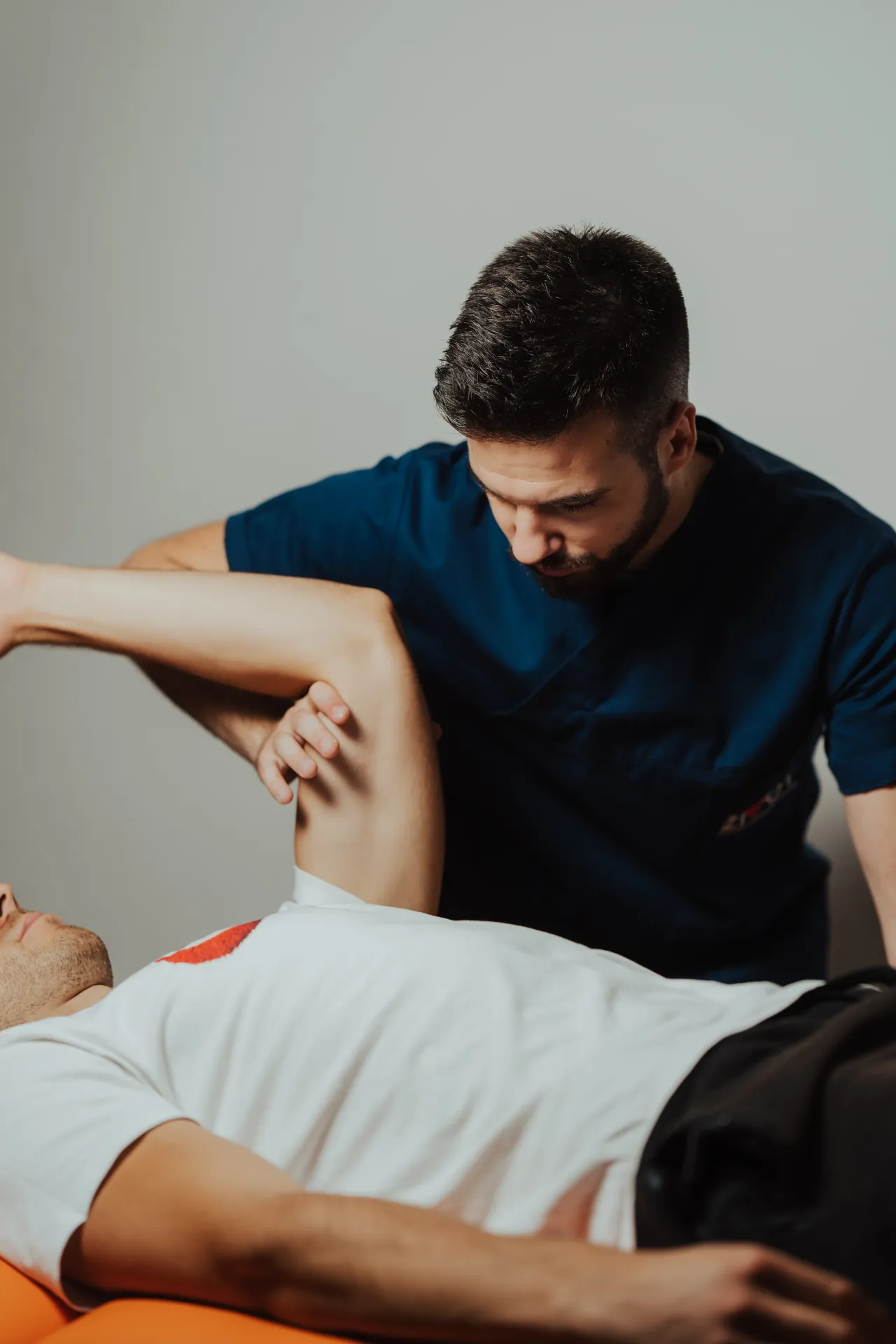
Kenan Gosto testing a patient’s hip in flexion on a treatment table
Kenan GostoMSc Physiotherapy

Mostar, Bosnia and Herzegovina

Kenan Gosto

Co-founder, Noxana physiotherapy and rehabilitation centre, Mostar, Bosnia and Herzegovina

Kenan has worked with elite athletes, including the Bosnia and Herzegovina national swimming team at European championships and European champion Lana Pudar. Alongside that, his daily caseload runs from recreational athletes to chronic pain patients.

He teaches colleagues and students through mentoring and practical workshops such as Physiotherapy 101.

  • BiH national swimming team
  • European champion Lana Pudar
  • Physiotherapy 101 workshops
“Find the cause of the dysfunction. Don't just treat the place that hurts.”

Our 10 Most Valuable Special Tests in Practice

Weak on paper. Reliable in our hands.

Send it to my inbox

Free. Unsubscribe from our emails with one click, anytime. Privacy policy.